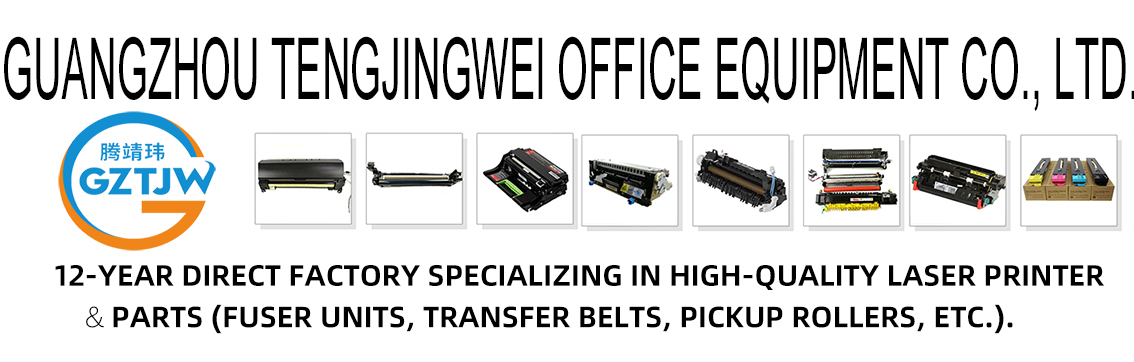


A compatible fuser is the right buy for most offices. It fits the same cavity, reaches similar page yields, and costs 30 to 60 percent less than the OEM unit. You should still reach for the OEM part when the machine is mission-critical, runs at high volume, or the failure risks downtime you cannot absorb. The hard part is not the price. It is finding a supplier that names your exact model instead of shipping a generic that almost fits.
I used to tell every caller to buy OEM. That advice was safe and it was lazy. After watching quality compatibles hold up on mid-volume Brother and HP fleets for years, I changed the default to "compatible unless the situation says otherwise." The rest of this guide explains where that line sits.
Contents
- What actually separates OEM from compatible
- OEM vs compatible, side by side
- Which model should you buy compatible for
- The parts that must stay OEM
- How to avoid a bad compatible
- FAQ
What actually separates OEM from compatible
An OEM fuser is built by the printer brand or its contracted line to the original drawings. A compatible fuser is reverse-engineered by a third party to hit the same dimensions, heat profile, and paper path. The heating lamp, thermistor, and pressure roller all do the same job.
The gap is in tolerances and materials. A reputable compatible matches the OEM heat curve closely. A no-name unit may run a few degrees off, which shows up as slightly softer fusing on heavy stock or a shorter life. I cannot promise a bargain-bin compatible holds OEM tolerances, and neither can the listing that calls it "100% equivalent." The supplier's name and the model list matter more than the marketing word.
OEM vs compatible, side by side
| Factor | OEM fuser | Quality compatible fuser |
|---|---|---|
| Price | 2 to 3 times the compatible | 30 to 60 percent less than OEM |
| Typical page yield | As rated (often 100,000 to 150,000 pages) | 80,000 to 100,000 on tested units |
| Warranty | 1 year | 6 to 12 months from a named brand |
| Failure risk | Low | Low to moderate when sourced well |
| Best for | High-volume, mission-critical print | Most offices, MPS contracts, budget buys |
The numbers above are ranges, not guarantees. Yield swings with paper weight, humidity, and how often the machine sits idle. A compatible that prints 90,000 clean pages in one office may fade at 60,000 in another that runs card stock all day.
Which model should you buy compatible for
Most current laser models accept a quality compatible fuser without trouble. These are the ones we see ordered as compatibles most often, with the caveat that matters:
| Printer | Compatible OK? | What to check |
|---|---|---|
| HP LaserJet M506 / M507 | Yes | Very common fit; many tested units exist |
| Brother MFC-L9570 / HL-L8360 | Yes | Pair with a fresh roller and belt |
| Canon imageCLASS MF644Cdw | Usually | Confirm voltage (110V vs 220V) |
| Lexmark CX / MC series | Yes for fuser | Keep the formatter board OEM |
| Xerox VersaLink C405 / C605 | Yes | A premium compatible holds up well |
If your model is not on this list, the safe move is to ask the supplier for the exact cross-reference before ordering. A fuser that "should fit" is not the same as one that is listed for your machine.
The parts that must stay OEM
A fuser is a wear item you can swap with a compatible and move on. A few parts are not. The formatter board carries the machine's logic and firmware handshake, so a poor copy can throw errors no cleaning step fixes. High-voltage power supplies and laser scanner units belong in the same keep-OEM bucket. When one of those fails, our formatter board range lists the OEM-spec units we stock.
That does not mean compatibles are only for fusers. Pickup rollers and separation pads are simple rubber parts where the OEM tolerance advantage is tiny, and a good compatible works fine. Our pickup roller range and transfer belt list cover the wear items most offices replace between fuser changes.
How to avoid a bad compatible
The single biggest predictor of a good compatible is the supplier's model list. Buy from a seller that prints the exact models a fuser fits, not one that hides behind "for most lasers." Three more checks:
- Match the voltage. A 110V fuser on 220V mains will cook the lamp and can damage the paper path.
- Look for a real warranty from a named brand, not "30 days if unopened."
- Skip the absolute cheapest listing when the printer is the only one you have.
If a compatible fuser ever causes repeat jams or a scorched paper path, pull it and go OEM for that machine. That is a small cost against a ruined printer.
FAQ
Will a compatible fuser damage my printer?
A quality compatible built for your exact model will not. The risk appears with generic units that run the wrong heat profile or a weak thermal fuse. Buy by model fit and the damage risk drops close to zero.
How much do I save with a compatible fuser?
Typically 30 to 60 percent versus the OEM part, and sometimes more on older models where the OEM price includes legacy tooling. On a fleet of ten mid-volume machines, that gap pays for a spare or two.
How can I tell if a fuser is OEM or compatible?
OEM units carry the printer brand on the label and usually a serial-tracked part number. Compatibles show a third-party brand and a cross-reference to the OEM number. If the box only says "fuser" with no model, treat it as unverified.
Is a refurbished fuser better than a compatible?
Not automatically. A professionally rebuilt fuser with a new sleeve and roller can outlast a cheap compatible, but a poor refurb is worse than both. For most buyers a new quality compatible is the steadier choice.
Which printer parts should stay OEM, not compatible?
Formatter boards, high-voltage power supplies, and laser scanner units. These carry logic and safety-critical tolerances where a bad copy costs far more than the part. Fusers, rollers, and belts are safe to run compatible.
No next


